Psychological strategies to handle emotions correctly
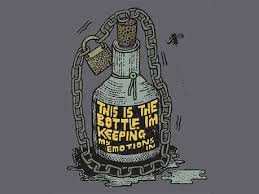
Our life is colorful because of the various emotions we experience day in and day out. Some of our emotions may be pleasurable while some sorrowful. Few people can express and process the emotions they experience while most of us can’t. Most often than not, emotions get suppressed because of mishandling by us to protect ourselves from the pain giving emotions. In today’s blogpost, I am trying to create awareness about the ideal ways of handling emotions and the ill-effects of suppressing emotions.
I, personally believe the acts and ill-effects of suppressing emotions can be better understood by illustrating some stories at the outset. The illustrations are given hereunder,
1. Raju who is in the living room, finds his 9 year old son, Adi, coming into the house back from school crying. Adi heads directly into the bedroom without greeting him. Raju, a single father, with the responsibilities of raising a kid alone, observes his kid’s behavior silently and prepares the evening snacks for his son. After almost half an hour of persuasion from Raju, Adi, agrees to come to the dining table to have his snacks. At the dining table, Adi still in a crying tone tries to explain to this father, how all his classmates were bullying him over his stammering. Without letting Adi go further into the details, Raju scolds him for crying and reminds him that he is not a kid anymore and that every person should be able to take care of their lives without depending on someone else. Raju further warned Adi to not repeat these acts of complaining about things that are bothering him. Adi helplessly looked at his father and went inside his room. Being a single father with the responsibilities of raising a child all by himself, after the death of his wife, made Raju hard like a rock. He adopted this way of admonishing Adi, to make him strong enough to deal with whatever the future holds for him.
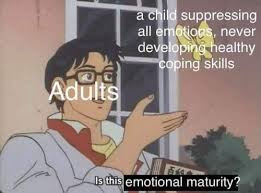
2. Reena, who after much efforts got permission from her parents to go work and live alone in a city away from them has been suffering from Insomnia for over a year now. She has abundance of issues in her office. Given she is a junior in her team, she has to deal with a lot of domination from everyone in the team and ill effects of various other office politics. Her lack of experience in handling such politics, toxic environment in the office, unfriendly colleagues, complicate her life further. As she lives all alone in a new city, she has no one at her disposal to share immediately share her plights and/or vent.
3. Vasu and Laxmi are ageing parents of two sons and a daughter. Their children have all shifted to USA post their respective studies. Usually, the children used to come visit their parents in India once a year but in the recent past, their visits to India have drastically come down. In the beginning they used to listen to their Parents’ old age problems but now they barely even call. The situation has worsened to an extent that both Vasu and Laxmi even hesitate even to call their children abroad as they feel like they would be disturbing them. Even if they do call anytime now, the conversation extends only upto sharing some pleasantries.
Needless to say, there are commonalities in all the aforementioned stories.
In the first case study, Adi is unable to express his grief and fear because of the non-approachable and dominating behavior of his father. In the second case study, Reena is unable to express her anger and disgust towards her team as she is a junior in the team. In the third case, Vasu and Laxmi are unable to express their loneliness and forsaken feeling to their children. Yes, they are all suffering and have no scope or chance to share their miseries. They are all undergoing emotional disturbances and are moving on silently, as if nothing is happening in their lives. Consciously, they are not thinking anything related to their problems. They have accepted their lives as they are. But still they experience troubles created by the original problems which they deny of existing. This is ‘Suppression of Emotions’ and also called as ‘Bottled-up emotions.’
Several theorists have explained umpteen numbers of emotions. But, largely, it can be concluded that there are five basic emotions which are joy, fear, disgust, sadness and anger. While experiencing these emotions, we usually feel a kind of agitation which we do not want to experience for a long time, so our mind tries to get rid of this. So we suppress those emotions.
Emotion suppression is the act of inhibiting the outward signs of your inner feeling.

There may be many number of reasons to suppress strong emotions which could range from thinking that people might consider us to be weak to something where we ourselves may feel that by brushing aside these emotions, we are handling our emotions very positively. Other reasons include, where we may not be having anyone to care and share or simply we might believe that no one will understand us or care. Whatever may be the reasons, while we suppress our emotions, we seldom tend to realize it is affecting our physical and mental health.
Emotional suppression might decrease the outward expression of our feeling but it does not change the inner emotional experience.
“I am alright, that’s ok”, “I am not the only one who is facing this”, these are the common dialogues we tell ourselves while suppressing our emotions and by doing so we feel that we are handling our emotions effectively. But what we fail to realize is that we are only pushing those emotions into a deeper level of our consciousness, which is a non-approachable area. Suppressed emotions may be in a non-approachable area, but they are still present, affecting us internally.
Society also follows certain gender stereotypes wherein girls can be more fearful, tearful and can also use rich emotional vocabulary. Whereas boys are encouraged to be angry, have out of control behavior, not have emotionally rich vocabulary. So usually boys suppress their emotions for fear of being judged by the society as having feminine nature. So, ‘mard ko dard nahi hota’ (man does not feel hurt) is a wrong concept and boys experience pain too and needless to say they feel like crying too.

An important question that now needs to be addressed is how to understand if we have suppressed our emotions or just controlled them effectively? Controlling emotions effectively is not wrong.
An easy tip to figure out for ourselves if we have only controlled our emotions and not suppressed them would be to check if we are able to discuss or talk about the suffering which we have undergone without avoiding and without worrying about the situation. This will definitely show that the person while had controlled the emotion then, has now also processed that emotion perfectly.
Researches have proven that bottled up emotions will lead to 30% of premature deaths with various other reasons. Risks of being diagnosed with cancer is 70% more in people who suppress their emotions.
The ill-effects of suppression of emotions,
At a physical level
- High blood pressure
- Diabetes
- Cancer
- Migraine headache
- Hormonal imbalances which include thyroid and ovarian disorders like PCOD
- Auto immune disorders
- chronic cold and sinusitis
- skin conditions like eczema and psoriasis
At a mental level
- Anxiety
- Depression
- Memory related problems
- Obsessive Compulsive Disorder
- Pain Disorder
- Psychosomatic Disorder
- Psycho Sexual Disorder
- Phobias
- Psychotic disorders like delusional disorders, schizophrenia, bipolar affective disoder
- Anger issues
- Substance abuse
- Relationship issues
As a Psychologist, a simple illustration that I have used, which has driven the point home to patients effectively is, drawing an analogy of the act of suppressing emotions with a burning Coal. Suppose you have a burning coal. You do not want to see or feel it. You keep that burning coal inside a table drawer to hide it from your sight. You will forget about it in a few minutes. But that coal will not stay mum. In the meantime, it will burn everything inside the table, later your table as well and if ignored further it will burn your premises too. Now, relate the burning coal with your suppressed emotions. If not processed properly, it will damage everything at physical and mental levels.
Some other tips to control emotions would be,
- Unbiased recognition of emotion -. Always honestly acknowledge, what kind of feeling you are going through. Usually emotions will be suppressed if they are identified them to be different. For example you are undergoing intense fear but you tell yourself that you are trying to adjust to the environment. If identified correctly you can understand the reason for your fear and then figure out how to deal with. Acknowledgement with honesty is very important.
- Confront with causing factor of your emotion – If you are scared of your boss then you should be prepared to confront your boss without that act affecting your job. One important thing we should remember is that, appropriate time, situation and person should be picked to solve any problem. If it is inappropriate, we tend to fail miserably.
- We should not be in conflict with the response we have chosen to our emotion in that particular situation. We should not feel regret.
- Do proper self-care activities to keep your mind calm and peaceful. Meditation, aerobics, yoga, hobbies like indoor games, painting, walking and jogging always help.
One should be intelligent enough to process the emotions properly. This capacity of the individual is commonly called as Emotional Quotient (EQ). It varies from person to person.
EQ refers to our ability to be aware of, regulate and express our emotions and to understand and respond skillfully to the emotions of others.
EQ can be nourished with research based strategies and an element of mindfulness by mental health professionals.

In conclusion, I would like to request you all to process your emotions properly. Control your emotions but not suppress them. Emotional suppression is very dangerous and you can save yourself from bigger physical and mental disorders by just handling your emotions in the correct manner.
Cheers.