Overcoming Anxiety
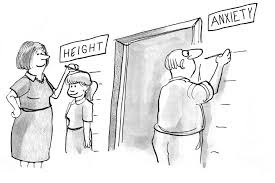
An hour before we write an exam or maybe even minutes before we present a seminar or hosting a party and also while we wait for our beloved family members to come back home when they are late than their usual time and this list keeps going on. In all these situations we experience an emotion with a peculiar sort of physical and mental signs and this emotion we experience, precisely is what Anxiety is. It is an extremely normal and regular emotion which is harmless in nature.
Then how is it that we have all come across someone or another whose anxiety levels are to an extent that they take professional help, you ask? It’s true, it would be incorrect to generalize anxiety into two distinct umbrellas of ‘dangerous’ and ‘harmless.’ Most often than not, by underplaying anxiety issues as simple tension, people fool themselves and progress towards psychiatric illnesses. Under scenarios like these, it helps to be aware of the basics of anxiety so as to know when we should start getting serious about taking professional help for this problem.

Anxiety, as such is a temporary state of emotion characterized by some physical and mental signs as a result of being exposed to a situation, which we perceive as a threat and assume our capacity to win over this threat as very less or sometimes even nil. Sometimes, the fear of losing something important or apprehension of some unpredictable dangers too can cause us anxiety. Typically, a person with anxiety may experience increased heart rate, profuse sweating, dryness of mouth, gasping for breath, giddiness, restlessness, urgent need to urinate or defecate, fear, clenched fist and clenched jaw, tightness of chest and neck muscles and loss of sleep as well.
Anxiety is a boon in a way, if it is at optimum levels which further stimulates us to overcome challenges and heightens our performance as well. But if it is intense enough to disrupt our day to day functioning and it completely incapacitates our activities then, needless to say, it becomes a bane.
If we were to observe, some people experience this anxiety whenever they are exposed to certain situations, usually in which they consider themselves to not be up to the mark to perform. Whereas some people experience anxiety in all the activities they do. Regular, routine and trivial day to day activities also bring anxiety in some people. If you feel anxious only when exposed to certain situations, then it is, what we call as ‘state anxiety.’ This is more or less commonly experienced by every person. If the anxiety can be related to the affecting situation, then it is, what we call as trait anxiety. People with trait anxiety suffer with this pervasively. Anxiety becomes a trait in their personality. Researchers say that, people with high trait anxiety experience more state anxiety to different situations of threat. People with trait anxiety have many chances of landing up in the mental illness category.
If anxiety becomes pathological it can turn into anxiety disorders. Besides anxiety as a solo disorder it is also found as an associated symptom of many psychiatric illnesses like OCD, Delusional Disorders, Schizophrenia and Phobias.Now, when should we give attention to this condition and get some professional help?
- When you find yourself worrying about events which are unlikely to happen. Eg: worry of losing all money in business though the business is at an all-time high.
- Physical complaints like increased heart rate, IBS, headaches etc.
- When you are avoiding too many events in the fear of getting embarrassed in front of people.
- When your relationships are getting disrupted because of repercussions from the anxiety.
- Loss of job or relationship & your professional growth being limited because of anxiety.
- When you experience no motivation or concentration for long periods of time to do general regular day to day activities.
If the above mentioned red flags are something that you experience or know someone who experiences then professional help is a must.
Often people with anxiety avoid the events which they feel threatened by. But this avoidance only backfires and anxiety and fear of that particular event gets more severe. This is the basic thing we should always remember. How much ever you may be anxious, you should attempt that activity. Otherwise that anxiety becomes a permanent guest.
Some self-help tips to deals with anxiety:-
- Whenever you experience some physical indicators of anxiety like increased heart rate or any others as mentioned above, calm yourselves by assuring that it is only anxiety and there is no danger to yourself other than these discomforting symptoms you are experiencing currently.
- When you experience physical signs of Anxiety, start doing some relaxation exercises like breathing exercises which will give immense and immediate relief.
- Make it a point to not avoid any activity which is producing anxiety in you.
- Auto suggestions and affirmations will help us in continuing the activity.
- Do not pay heed to the physical symptoms and focus on the work as they are just indicators of what’s going on in your brain. If you calm your brain, then you will be able to get a hold over the physical indicators as well.
These are 5 important immediate things you should do when the anxiety you are experiencing becomes overwhelming.
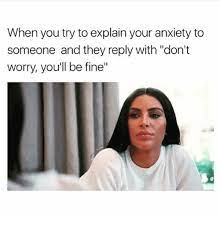
If you witness your friend or family member undergoing an anxiety attack, never say “calm yourself” or “relax” or “there is nothing to worry about” or “I too have many problems”. Instead it is better to hear them out and ask them to do deep breathing exercises. This will help them initially. Later we can tell how the intrusive negative thoughts are making them anxious.
Psychotherapy is very effective in curing anxiety. If counseling and psychotherapy are not effective in severe cases, then psychiatrist consultation is a must.
I am aware that with the Corona second wave, anxiety levels in general are at an all time high. Please take necessary precautions and if you are still feeling anxious about anything related to the uncertainty arising out of COVID-19, you can contact me at drkavithanarayandas@gmail.com, would be more than happy to help and guide you during these times of distress. Stay mentally healthy always.
A word of caution – The memes in this blog are not my idea, they are my son’s, who says these will help the younger readers connect more with the blog. Giving it a try with this blog, probably won’t let him do it further on.